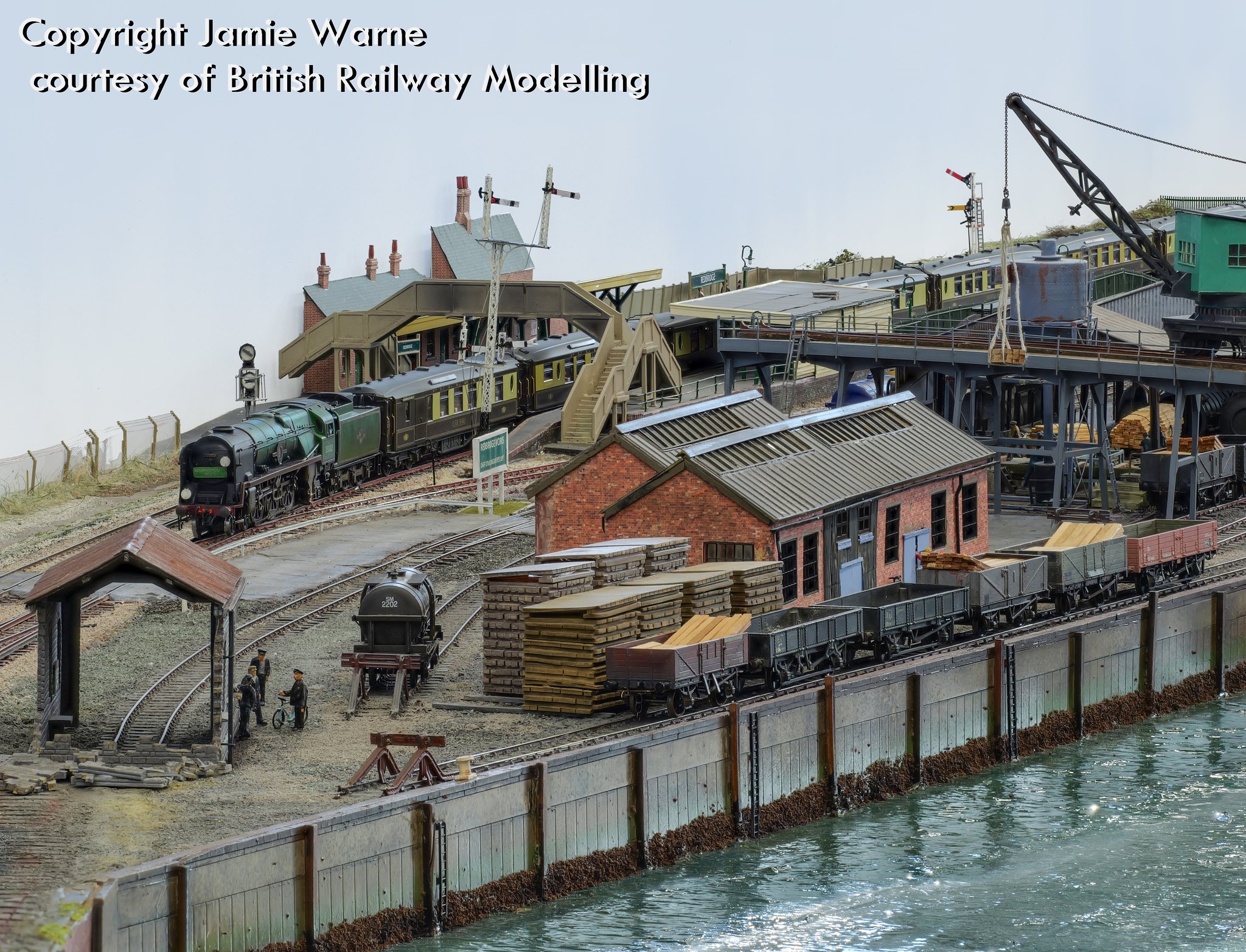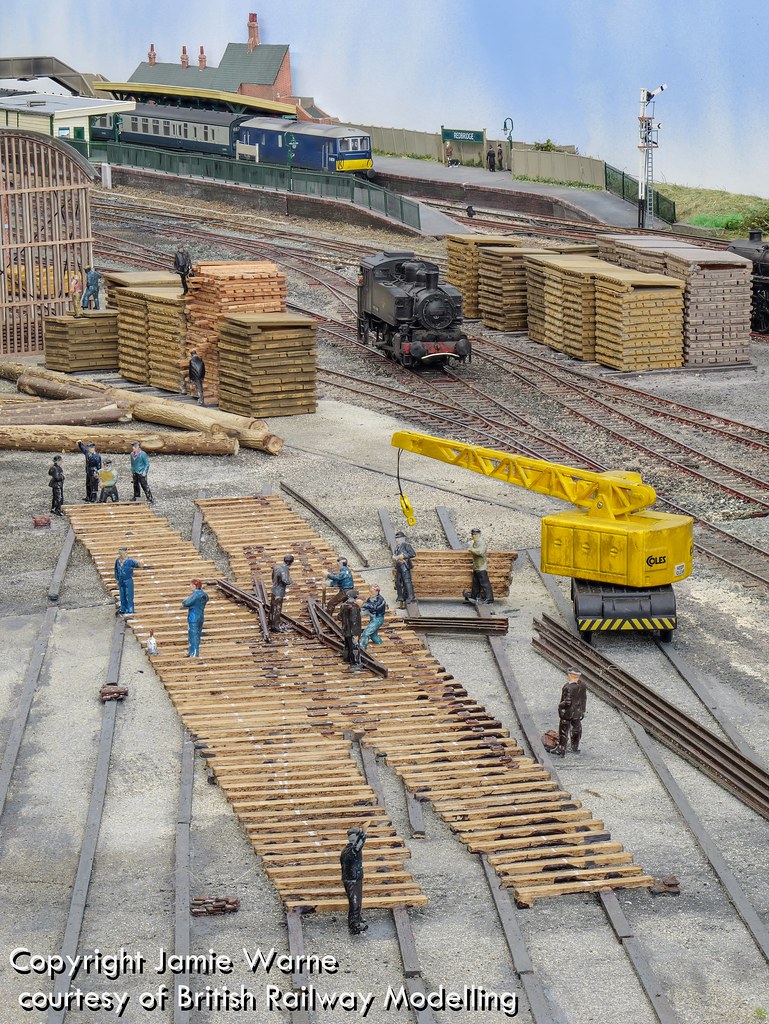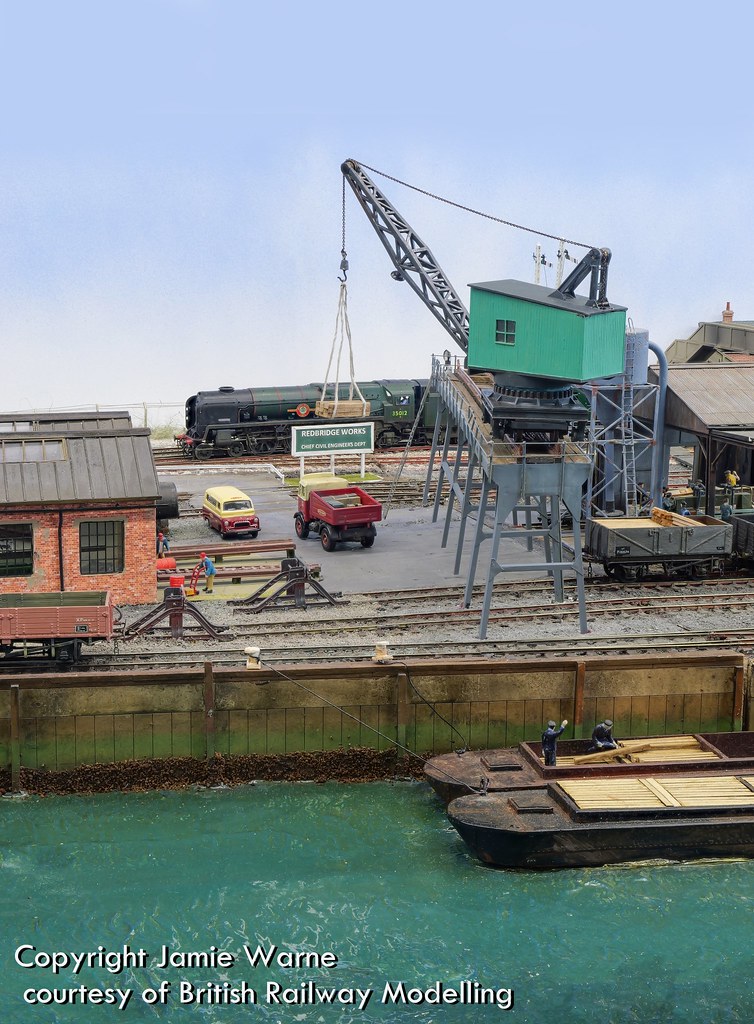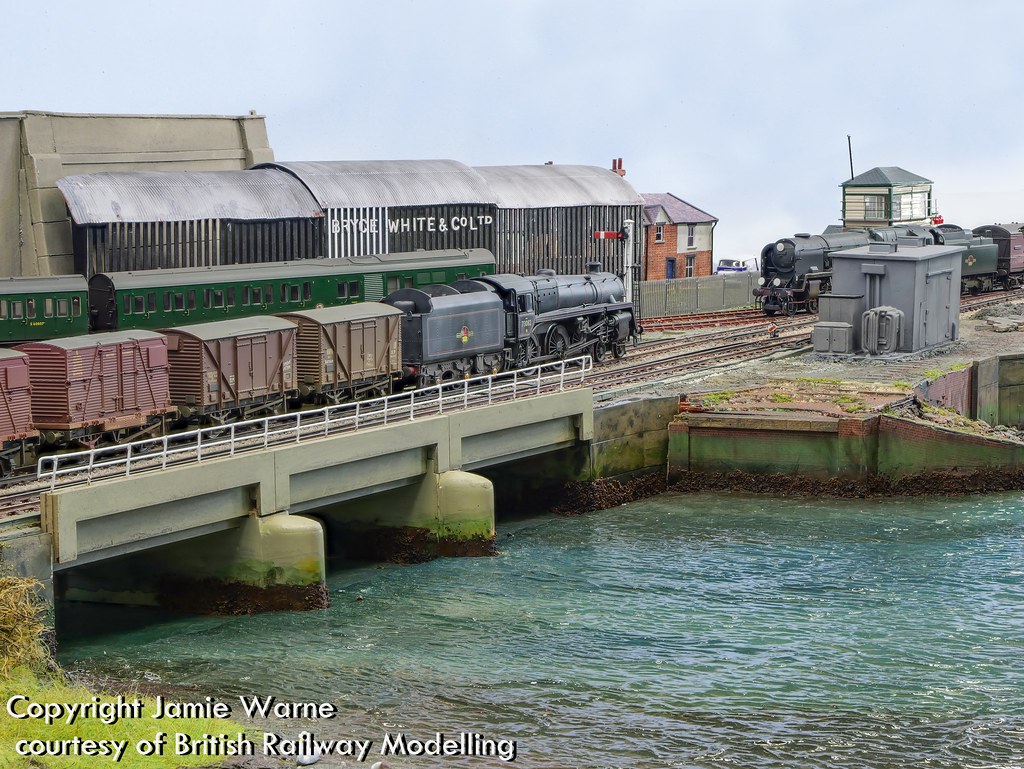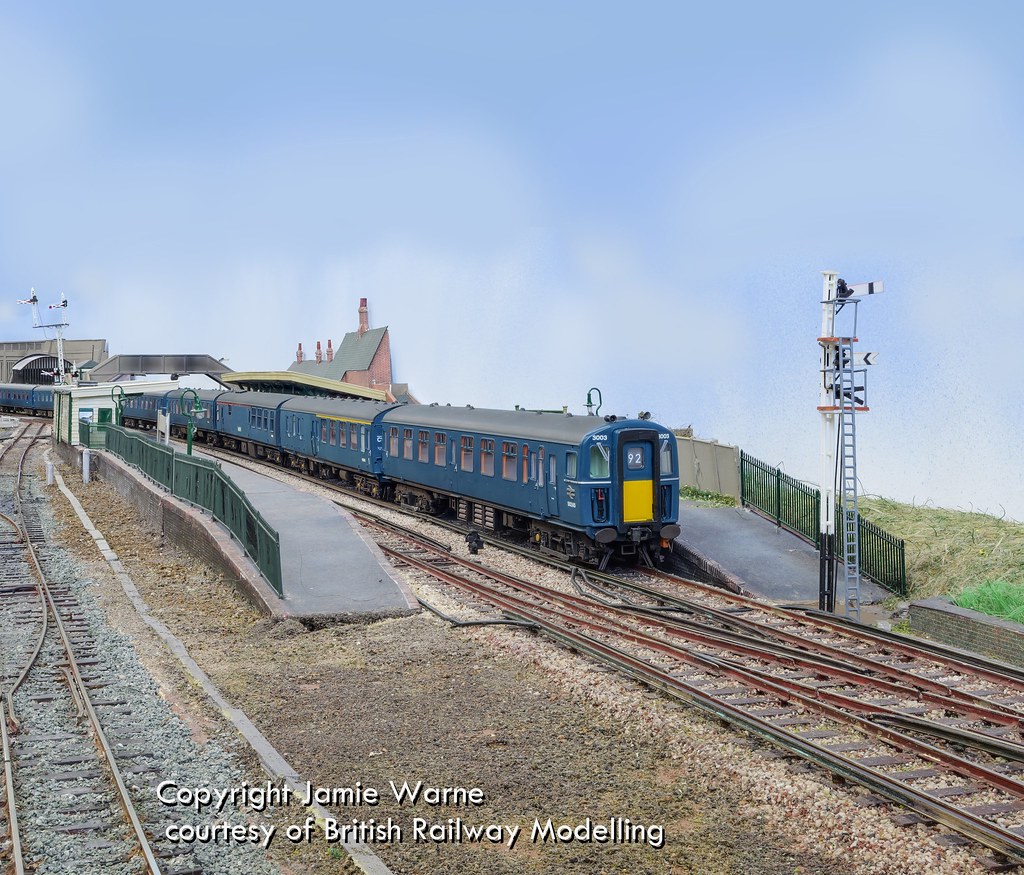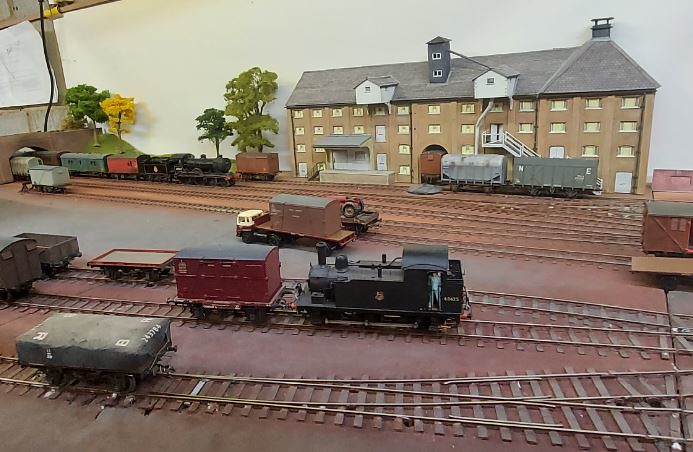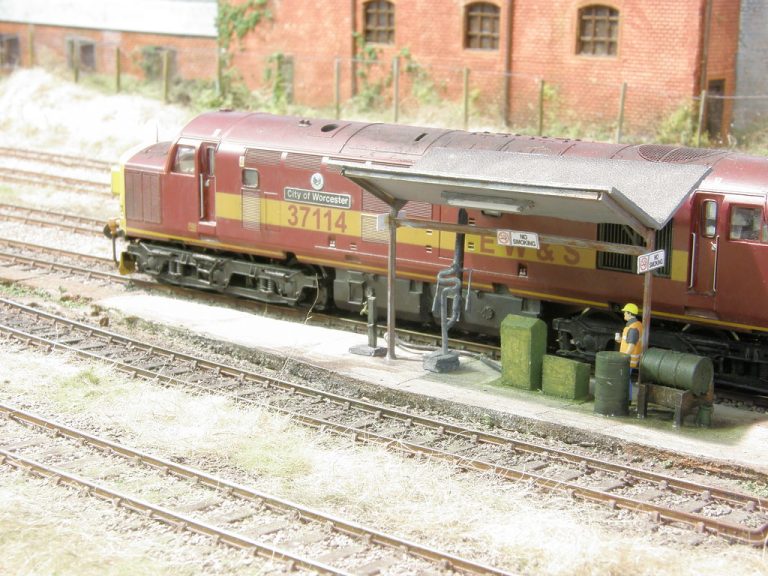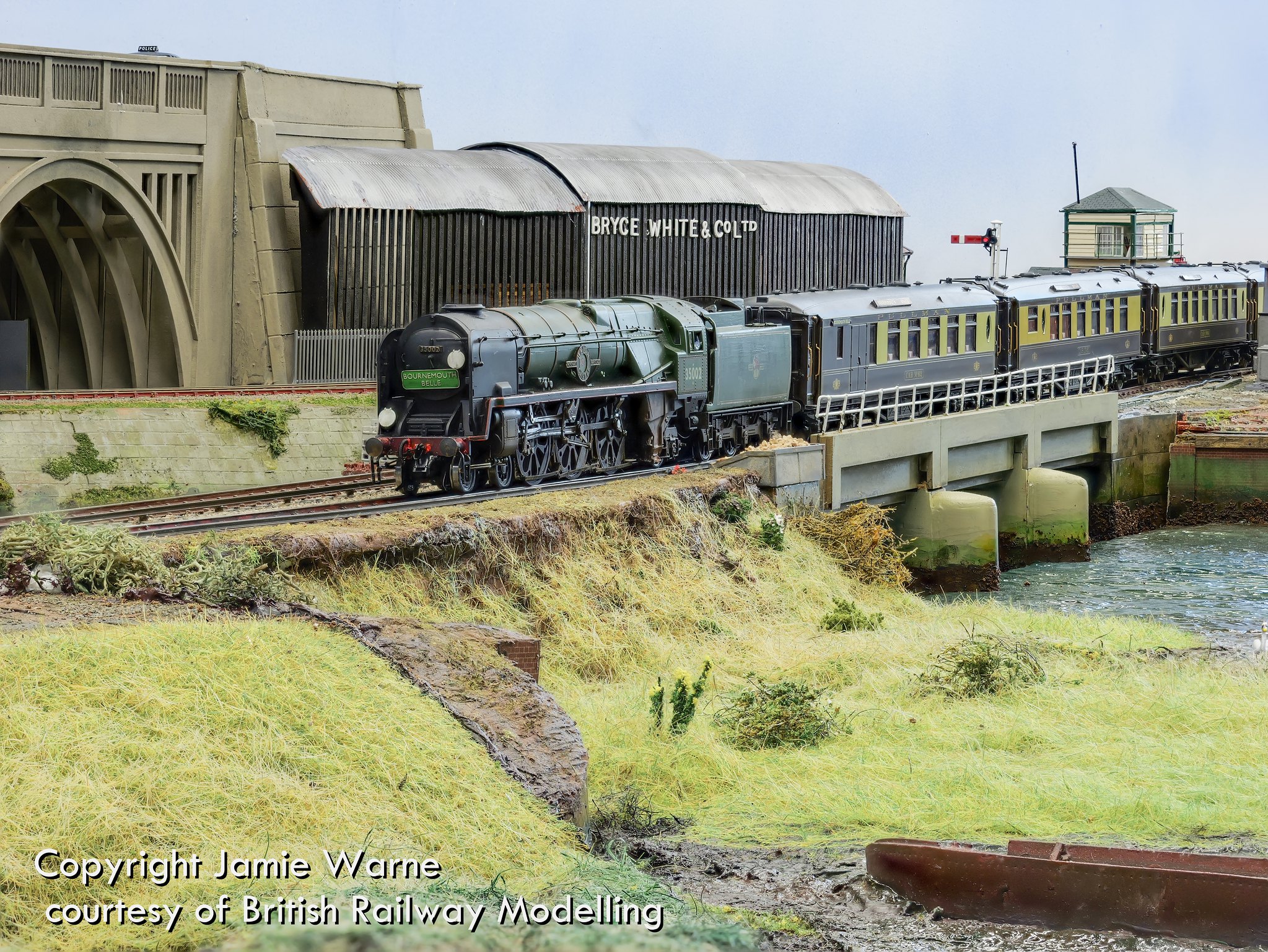
Redbridge Wharf is the club’s multi-award-winning OO gauge exhibition layout. It recreates the long-demolished Southern sleeper works at Redbridge, on the northern shore of Southampton Water where the River Test runs into the estuary.
There has been a wharf here for several hundred years. The railway arrived in the mid 1800s, first using the site to hold materials as the line pushed west, then to make sleepers, bridge timbers and cast track components. In its final years the works assembled long welded rail and laid out large pointwork complexes.
The view from Eling
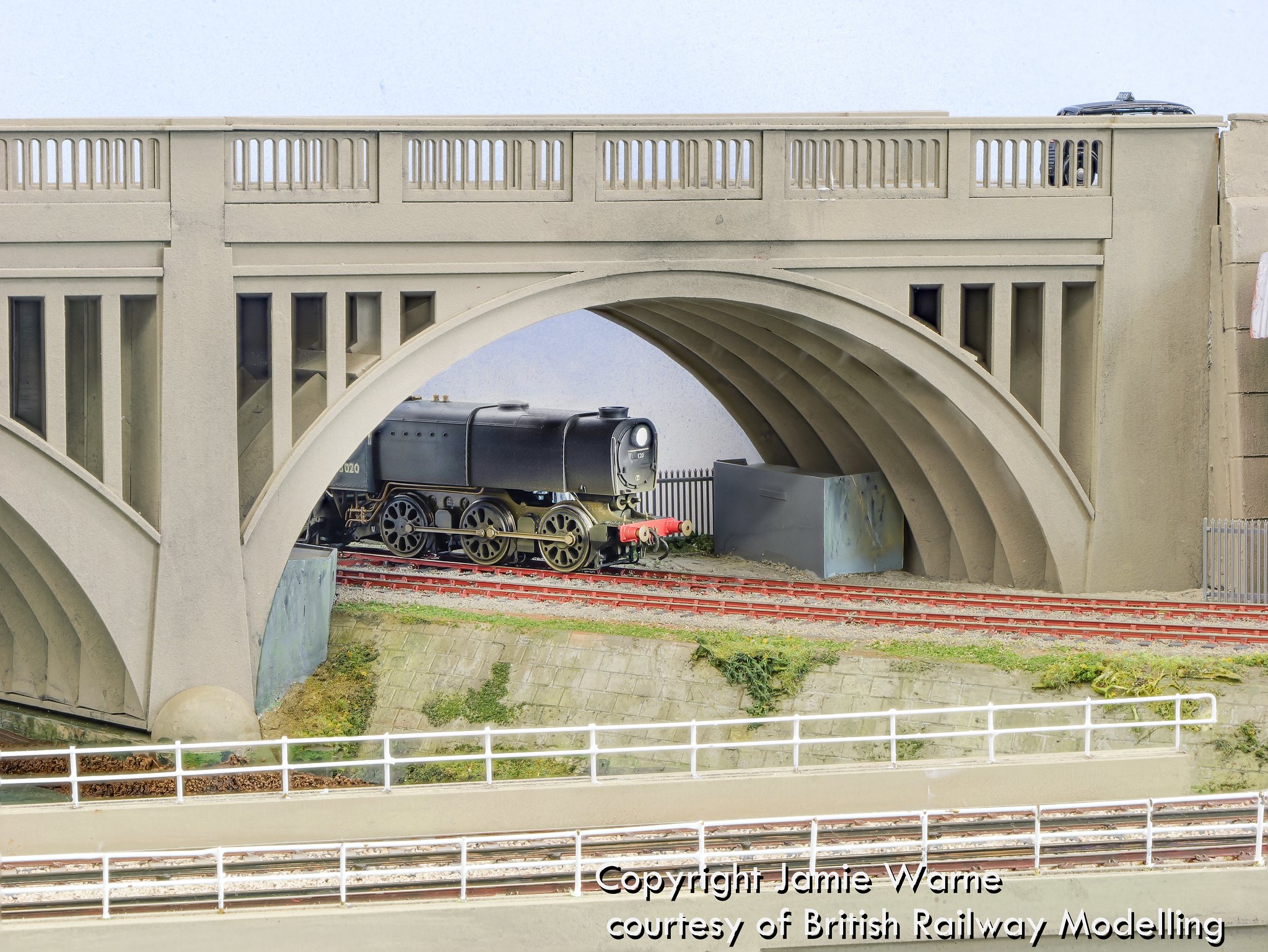
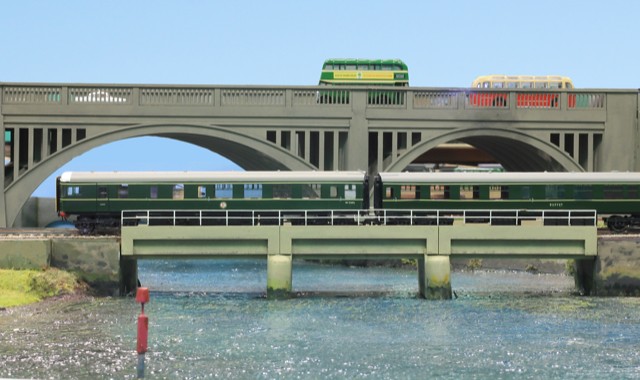
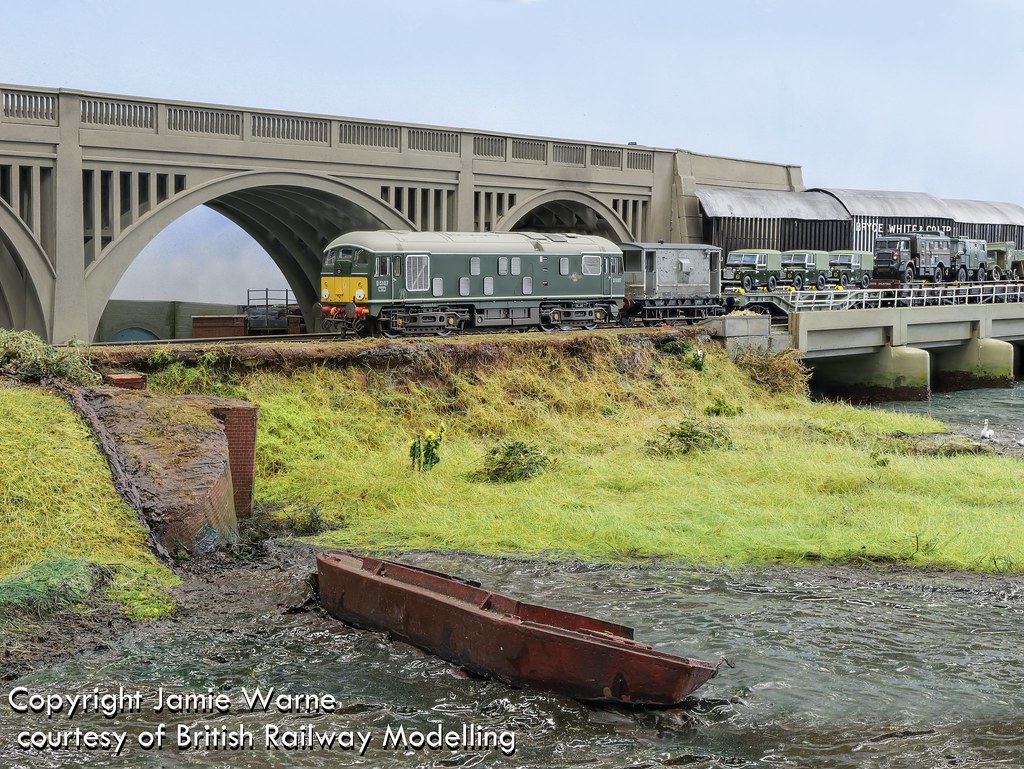
Visitors look across the River Test as if standing out on the marsh off Eling. The wharf sits in the middle, with the works behind it and Redbridge station and junction at the back. The junction brings a steady stream of main line, branch and freight traffic, and the rail and road causeways frame the left-hand end of the layout.
What to look out for
- The upper reaches of Southampton Water and the River Test, with salt marsh, mudflats and several distinctive bridges
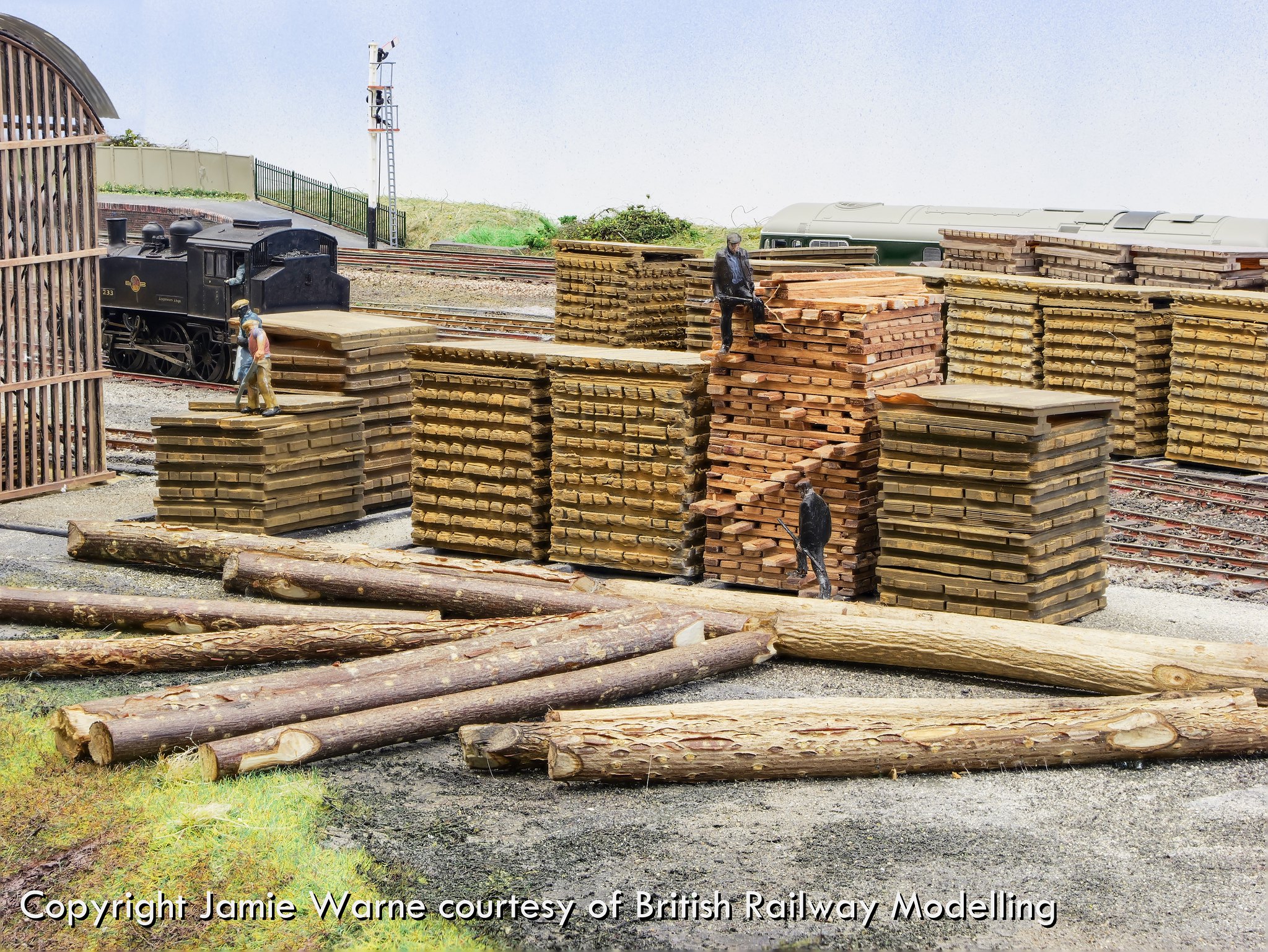
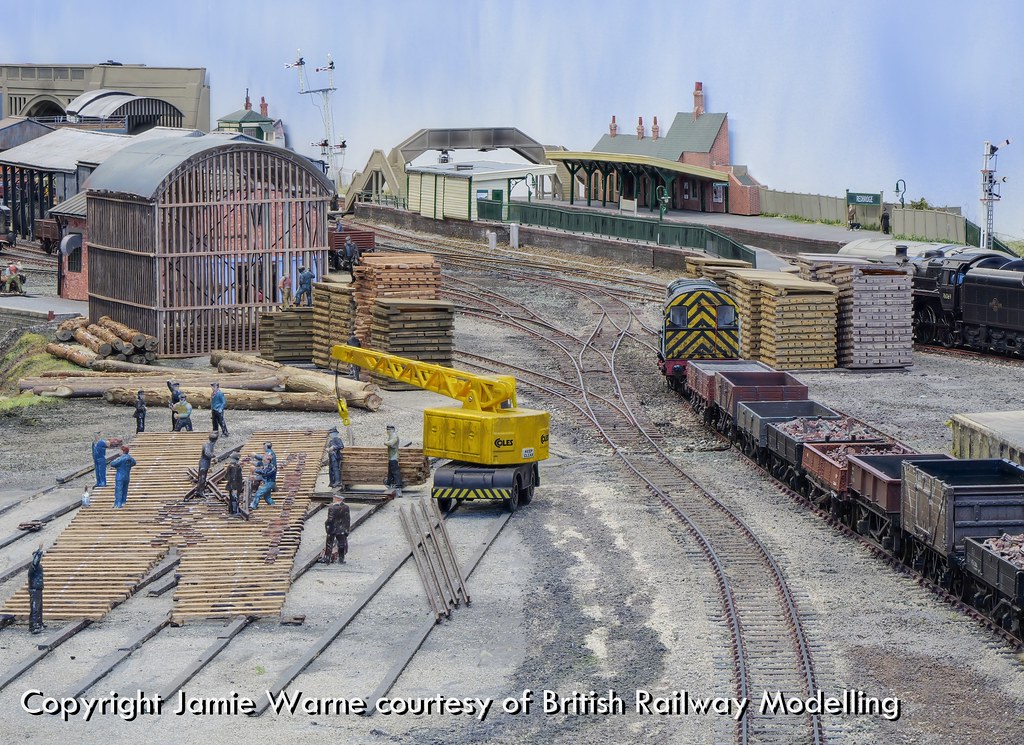
- The wharf, with a gantry crane, mobile steam cranes and piles of timber and sleepers
- The timber pond and timber drying shed
- The foundry and its buildings
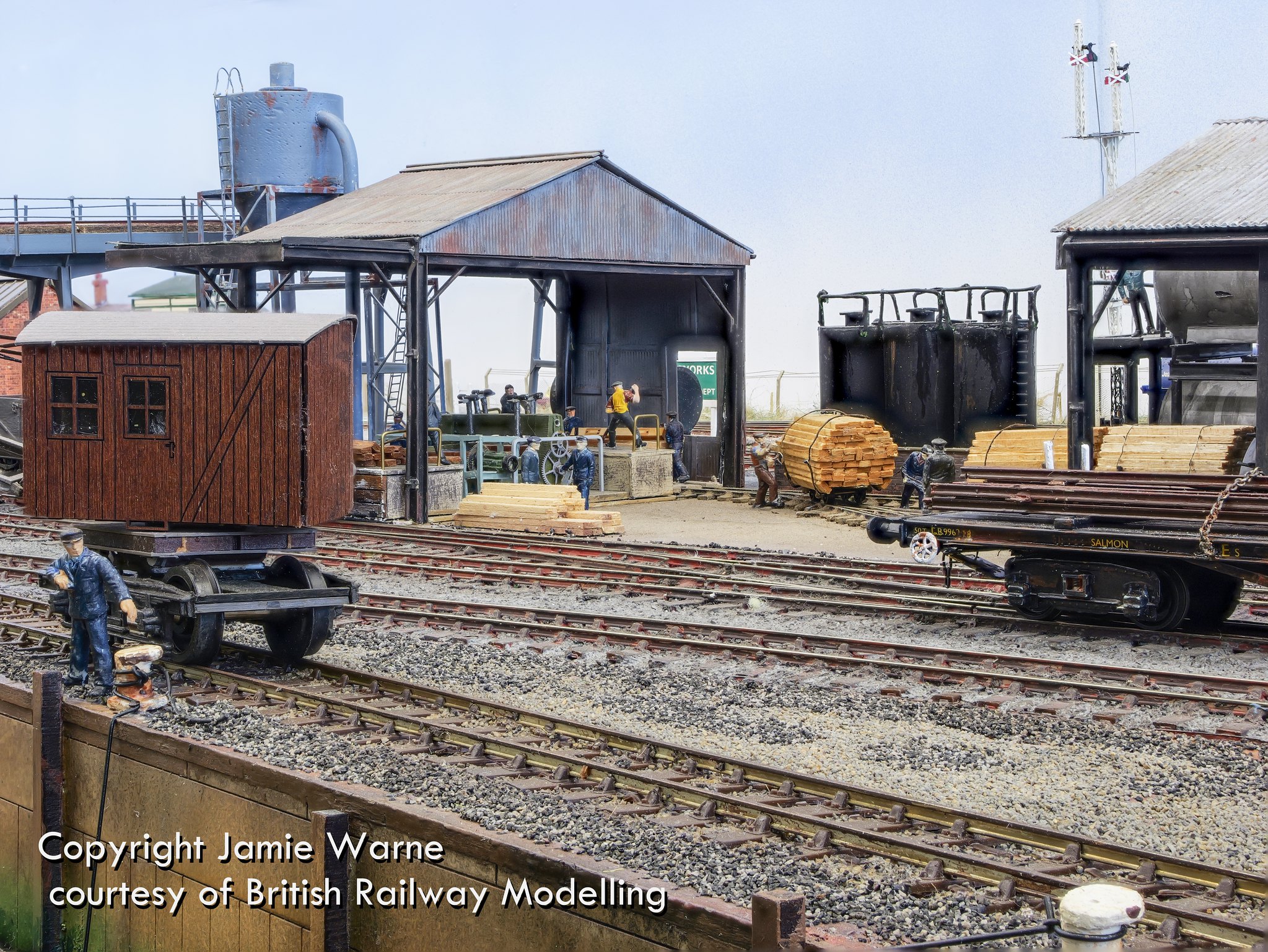
- The high-pressure creosote plant, with narrow gauge feed tracks running into the pressure vessels
- The laying-up ground, where pointwork is assembled in the yard
- Machine shops, sawmills, drying sheds and all the clutter that goes with them
- The reclamation area, where old sleepers and chairs are sorted and assessed
- River traffic, including a TID tug and loaded barges
- The main lines to Bournemouth and Salisbury, with Redbridge station, junction and signal box
When it’s set
The new rail and road causeways, and the third rail laid in 1965, make that the earliest possible date, so the layout aims for the look of 1966 and 1967. That lets us run anything from the last of Southern steam to the diesels and electrics that replaced it.
Traffic through Redbridge in the mid 1960s
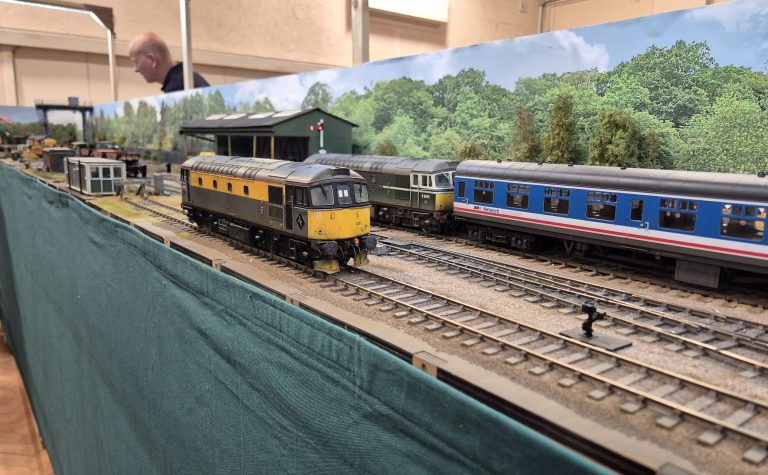
Up to the last day of Southern steam on 9 July 1967, Redbridge saw an extraordinary mix. Bulleid Pacifics still worked the Bournemouth expresses, alongside BR Standard classes and growing numbers of Cromptons (Class 33s). Hampshire “Thumper” diesel units had taken over the Salisbury to Southampton stoppers from the M7 tanks in 1963.
Inter-regional trains brought Black Fives, Hymeks, Peaks and Swindon DMUs, while freight from the Western Docks, Poole and Weymouth was often in the hands of Warships and Westerns. Fawley refinery sent oil trains north behind 9Fs and later Cromptons, and military trains from Marchwood used the Redbridge sidings to reverse.
The works itself kept the yard busy: timber mostly by ship, rails, creosote and coke tripped in from Eastleigh, sleepers and rail panels going out, and demolition trains from closed lines bringing rails, chairs and sleepers back for reclamation.
Redbridge Wharf keeps developing, and we aim to add something new for every exhibition.